


Misohitomoji
Japanese Samurai Poetry T-shirt – Calligraphy Front & English Translation Back (Kaishū Katsu)
Japanese Samurai Poetry T-shirt – Calligraphy Front & English Translation Back (Kaishū Katsu)
無法載入取貨服務供應情況
• 100% cotton
• Sport Grey is 90% cotton, 10% polyester
• Ash Grey is 99% cotton, 1% polyester
• Heather colors are 50% cotton, 50% polyester
• Fabric weight: 5.0–5.3 oz/yd² (170-180 g/m²)
• Open-end yarn
• Tubular fabric
• Taped neck and shoulders
• Double seam at sleeves and bottom hem
• Blank product sourced from Honduras, Nicaragua, Haiti, Dominican Republic, Bangladesh, Mexico
Disclaimers:
• Due to the fabric properties, the White color variant may appear off-white rather than bright white.
• Dark color speckles throughout the fabric are expected for the color Natural.
*Default currency is USD. Please check your selected currency.


Pricing & Shipping Information
Currency Information
All prices are shown in USD by default. Depending on your location, the currency may change automatically or you can select it manually. International shipping available.
Shipping Costs / Shipping Information
Shipping costs are automatically calculated at checkout.
Orders are fulfilled from the facility closest to your delivery address, so the shipping origin may vary by region.
For example, average cost is $5–10 within the U.S. and $10–15 worldwide when shipped from U.S. facilities.
Customs, Taxes & Duties
Customs fees or import duties may apply depending on your country’s regulations.
Waka Poem by Kaishū Katsu
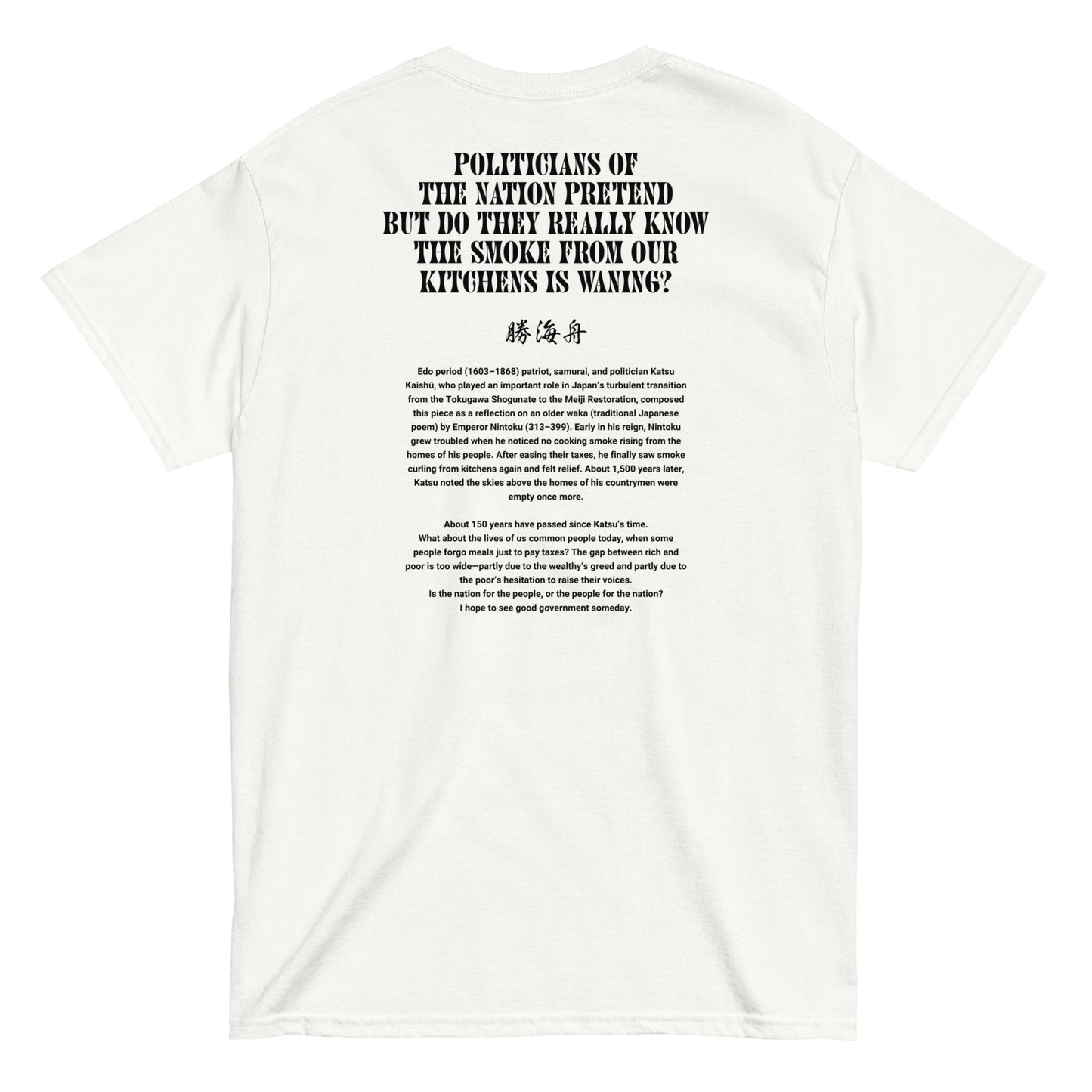
This unique T-shirt features a classic Japanese waka poem by Kaishū Katsu, a renowned samurai and statesman of the late Edo period. The front design displays the poem in bold Japanese calligraphy, while the back showcases its English translation and historical explanation, making it a wearable blend of poetry, history, and culture. Perfect for those who love Japanese literature, samurai heritage, and meaningful apparel.
Poem (English translation):
Politicians of
the nation pretend
but do they really know
the smoke from our
kitchens is waning?
Historical Background
Edo period (1603–1868) patriot, samurai, and political reformer Kaishū Katsu composed this waka as a reflection on an older poem by Emperor Nintoku (313–399). Early in his reign, Nintoku grew troubled when he noticed no cooking smoke rising from the homes of his people. After easing their taxes, he finally saw smoke curling from kitchens again and felt relief. About 1,500 years later, Kaishū, living in the upheaval of late Edo, noted the skies above the homes of his countrymen were once more devoid of smoke.
Why This Poem Resonates With Me
More than 150 years have passed since Kaishū’s time. Yet the question remains: What about the lives of ordinary people today, when some forgo meals just to pay taxes? The gap between rich and poor is too wide—partly due to the wealthy’s greed and partly due to the poor’s hesitation to raise their voices. Is the nation for the people, or the people for the nation? Like Kaishū, we may still long for a government that truly serves its people.

Introducing the Japanese poem "The Importance of the Present Moment"
On the inside cover of this notebook is a tanka poem about the value of living in the present moment, which is passing away between now and now. The same message as Goethe’s, that the best remedy to this is to live this present moment to the fullest, has been cited many times in Japan through waka poems. This message is repeated so often because we know its importance and the challenge of putting its wisdom into action. That is why we need to convey this teaching again and again.
-
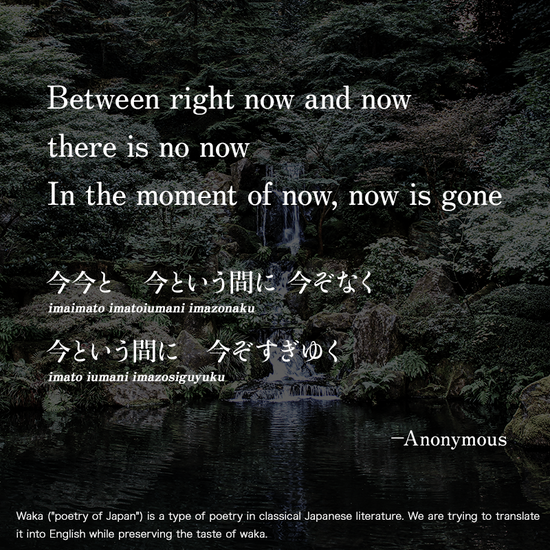
In our busy daily lives, we get caught up in small tasks and let days pass by without doing what we really want to do.
Is it because we are simply avoiding the hassle of doing what we want to do, or think we should be doing? Is it because we have become accustomed to living without being aware of the present moment?
However, if it is a hassle that cannot be avoided, do it now. If you really want to do something, do it "now" and not "some other time." Just as "now" is gone as soon as we think it, our lives, who we are, change each moment. There is no guarantee that the you of now and the you of the next moment will be the same. How can you be sure they will be? If you have something to be done, do it. If you have something you want to do, do it. -
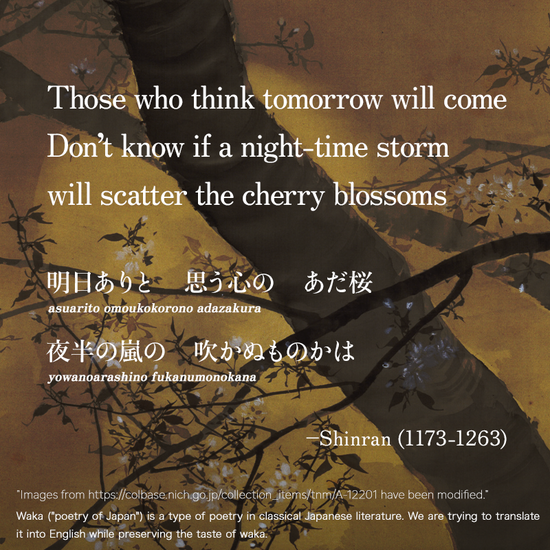
Waka often have repeat the same instructive themes, repeating to the point where I wonder if the reason the same themes appear again and again in these poems is because most people don’t do a good job of following their lessons. I can’t help but smile when I think of my own failures, and I feel a sense of camaraderie with my predecessors.
-
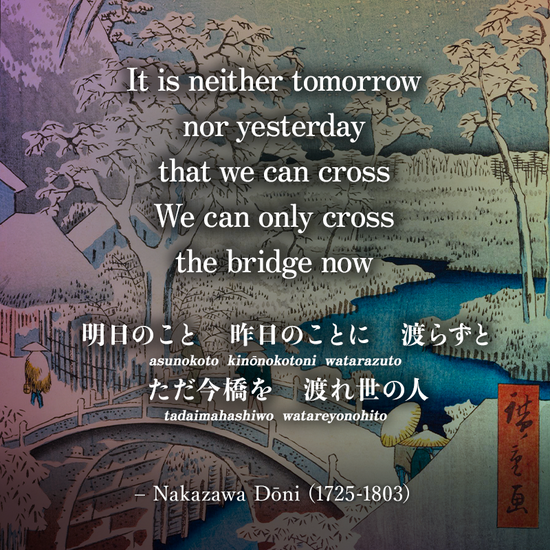
We have to cross the bridges in front of us at this moment, without putting it off for tomorrow or regretting what we should have done yesterday. Now is not the time to be anxious about an uncertain tomorrow, nor to have unfounded expectations, nor to dwell on a yesterday that will never return. The future lies beyond the accumulation of the present. If we keep reaching tomorrow without doing anything today, eventually we’re going to be too old to make the full use of our time that we could be making of it today.
